
The outdoor spaces in your property tell a lot about your personality. Pruning can play a crucial role in maintaining a stunning outdoor space that can help you make a lasting impression. If you are wondering what the 123 rule of pruning is, then we can tell you that it refers to a guideline to ensure your tree’s growth. Whether you want to maintain healthy fruit trees or ensure consistent fruit production, hiring experts for this crucial task is necessary. Attempting DIYs might seem tempting, but they can often do more harm than good. Some people often cause serious damage to their trees in an effort to achieve that perfectly shaped shrub or hedge. To prevent this from happening and ensure a flawless finish, you can trust pruning specialists in Texas.
What Are the Key Aspects of the 1/3 Rule?
To understand the importance of the 1/3 rule, first, you need to understand why you need pruning services in the first place. The main purpose of pruning is to promote calm trees with high-quality and productive spurs. You should know that the unproductive upright shoots cannot do any good to your trees, and also to the overall visual appeal of your property. The overgrown branches not only affect the overall health of the tree but can also pose serious safety risks.
The Role of Renewal in Pruning
One of the main aspects of the 123 rule of pruning is renewal. We focus on removing the older and dead wood to keep the tree productive. Also, some people don’t even realize that the old wood can affect the young fruiting wood. If you want to optimize fruit size and enhance productivity, it is essential to keep the spacing between the old and young wood.
What You Should Know About the 123 Rule of Pruning?
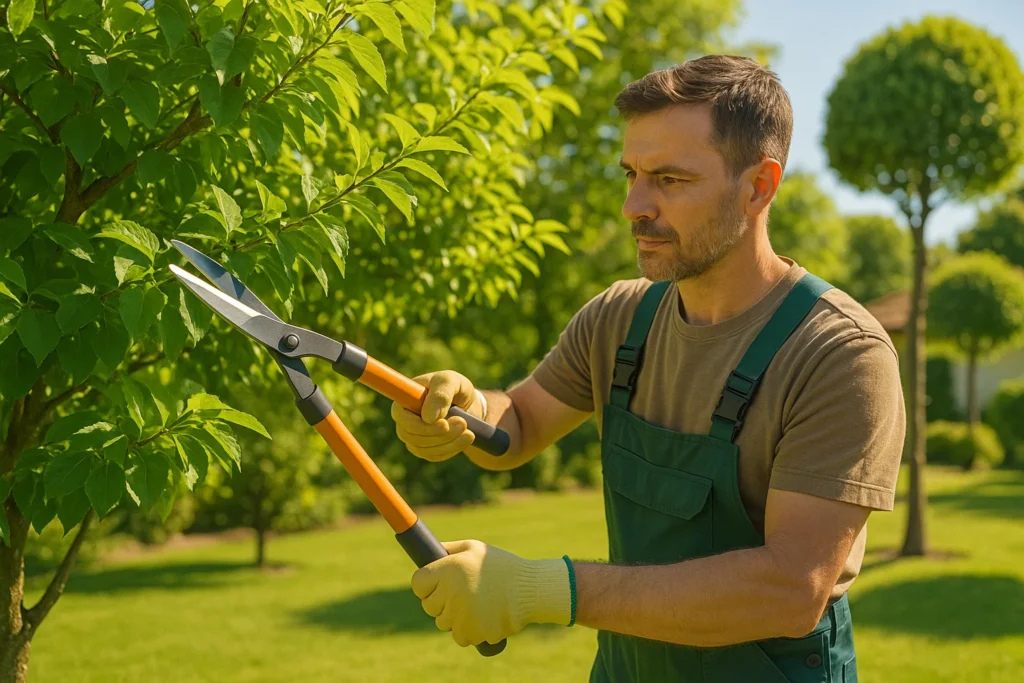
We can assure you that you don’t want to attempt 123 rule of pruning by yourself without any understanding of how this works. The first thing that you should know about is that no more than a third of a tree’s branches should be removed during any pruning cycle. The older trees just need a lighter touch, as twenty percent is maximum for them. We can tell you that this doesn’t mean you can remove a third of the leaf-bearing material every year, because this can slow down or even stop the growth of the tree. One of the most important things that every environmental lover should know is that the typical pruning cycle for a shade tree is three years.
Prevent Bark Tearing with Expert Pruning
Some people often clean out the lower branches without any compelling reason to do so. There is no need to do this unless these branches pose any safety or disease risks. In the hot summer days, these lower and interior branches not only offer you shade from the sun but can also ensure that the upper branches don’t get too much sun, as it can make it very hard for them to photosynthesize.
When Does Hard Pruning Become Essential?
Many old-fashioned or multi-stemmed garden shrubs need hard pruning. While handling pruning by themselves, the owners often remove the lower branches without even knowing that these branches can carry on essential tree functions in a hot summer when the upper branches can’t do that. For a small tree, we believe that one 123 rule of pruning session should be enough for every growing. At other times, you need to make sure that pruning is limited to the removal of dead branches or simple shaping to keep hedges in their proper shape and avoid safety hazards.
In early spring, if a branch is more than an inch in diameter, then there is a greater risk of having a strip of bark tear down the trunk. You can reduce this problem by using a 3-stage cut. If you don’t have any idea about what it is, then we are here for you. The first cut should be made on the underside of the branch, and the second cut should be made directly above the first 123 rule of pruning. Once the branch is removed, you can make the third cut just outside the branch collar.
The Proven Techniques of the General Pruning
If you have not done it before and you are just getting started, then this means that you need to look for the three Ds: dead, damaged, and diseased branches. After you have found the tree D’s, you need to use a precision tool to remove them. Once you have removed them, you can clearly see what else needs attention. When you have ignored a shrub for many years, it is possible that it may have gotten so overgrown that normal 123 rule of pruning isn’t enough. For these shrubs, we can also recommend rejuvenation pruning to cut the entire shrub off. Let us improve the overall shape and growth of your trees.