
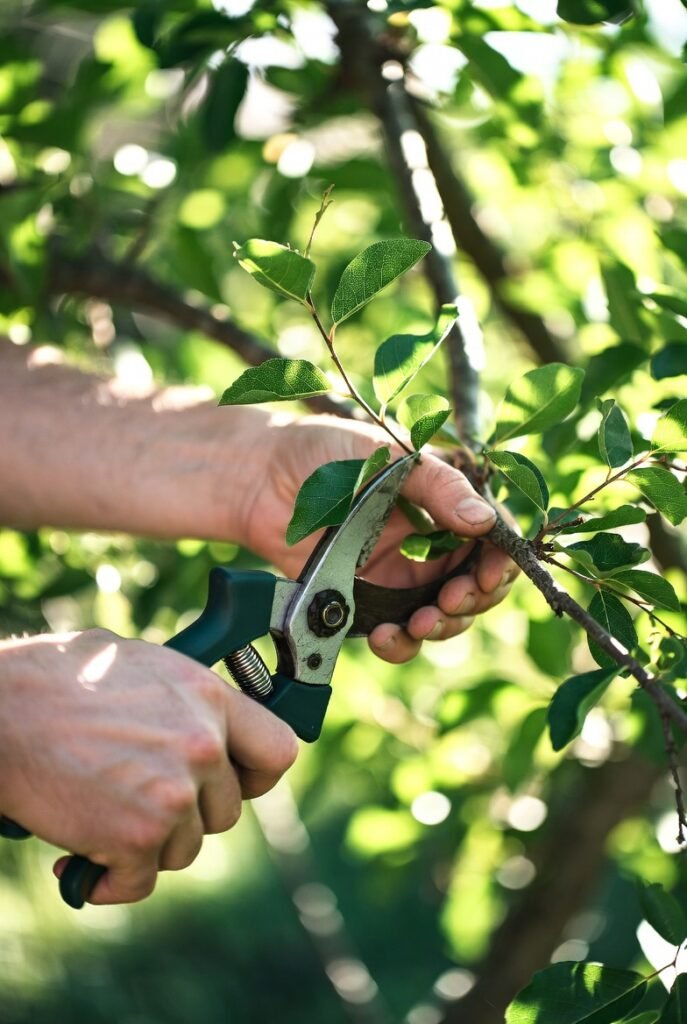
Knowing the five rules of pruning before you pick up a pair of shears could save a plant that took years to grow. Most people treat rules of pruning like a haircut — cut it back when it looks too big, done. Then they’re surprised when the rose bush skips a season of blooming, or the tree they “cleaned up” last fall looks rough and stunted the following spring. The cuts you make affect plants for years. Getting them right isn’t complicated, but it does require knowing a few things that aren’t obvious.
Rule 1: Prune at the Right Time Timing Matters More Than Most Gardeners Realize
Get the timing wrong, and you can do real damage to a plant even with perfect technique. The general rule for most trees and deciduous shrubs is late winter to very early spring — right before new growth pushes out. The plant is still dormant, so the stress of losing branches is minimal, and wounds start healing quickly once growth resumes.
But spring-flowering plants break that rule entirely. Lilac, forsythia, azalea, rhododendron — these set next year’s flower buds in fall. Prune them in late winter, and you’re cutting off every bloom you’d have gotten that season. The fix is simple: prune these immediately after they finish flowering. Give it a week or two, and you’re fine. Wait until fall, and you’ve lost a whole season.
Summer-flowering shrubs flip the logic again when it comes to rules of pruning for Trees and Shrubs. Butterfly bush, crape myrtle, and most hydrangea varieties bloom on new growth from the current season. Prune them in late winter before anything pushes out, and you’re actually encouraging the growth they need to flower.
Fall rules of pruning is rarely the right call. New growth that gets stimulated in the fall won’t harden before cold sets in. You’ve pushed the plant to do something at the worst possible moment.
Rule 2: Use the Right Tools and Keep Them Sharp
A dull blade doesn’t cut tissue; it crushes and tears it. Torn tissue heals more slowly, holds moisture in the wound longer, and gives disease a better entry point than a clean cut does.
Hand pruners handle stems up to about three-quarters of an inch. Loppers, with their longer handles and more leverage, work for branches up to an inch and a half to two inches. Anything thicker needs a rules of pruning saw; trying to force loppers through wood that’s too heavy damages both the tool and the cut. Hedge shears go on hedges, not on individual branches.
Rule 3: Cut in the Right Place: Where the Blade Lands Matters
This is where well-meaning rules of pruning does the most damage. People look at a branch they want to remove and cut it off somewhere in the middle, or flush with the trunk, or leave a foot of stub sticking out. None of those is right.
The branch collar is what you’re looking for — the slightly swollen, sometimes wrinkled area where the branch attaches to the trunk or parent stem. Cut just outside it. The collar contains the tissue that seals the wound. Cut into it, and that healing tissue is gone. Leave a long stub outside it, and dead wood sits open at the end, unable to seal, eventually rotting back into the trunk.
Rule 4: Deal with Problem Wood First, Basic Pruning Guidelines
Before any shaping happens, go through Basic rules of pruning Guidelines and understand what the industry calls the three Ds: dead, diseased, and damaged. These branches come out regardless of timing, regardless of season. They’re either harming the plant already, or they’re about to.
Dead wood is usually obvious once you know what you’re looking for: no buds, no leaf-out in spring, bark that slips or crumbles. Cut it out.
Diseased wood cankers, unusual discoloration, bacterial ooze, and visible fungal growth are removed, and the blade gets disinfected before the next cut. Spreading disease from a compromised branch to a healthy one through an unclean tool defeats everything you’re trying to do.
Damaged branches from storms or equipment contact are structurally compromised. They tend to fail in ways that cause more damage than the original injury, so removing them before that happens is worth the work.
Rule 5: Stop Before You Take Too Much
The urge to keep going while you’re already out there is understandable. But removing too much foliage at once takes away the plant’s ability to photosynthesize and produce the energy it needs to recover. The standard guidance for trees is no more than 25 percent of the canopy removed in a single session. For shrubs, a similar ceiling applies.
When a plant loses too much too fast, it panics. The stress response produces masses of fast-growing water sprouts vertically that look like the plant is bouncing back, but are structurally weak and take years to integrate properly. You’ve set it back rather than helped it.
Frequently Asked Questions
Is it ever okay to prune outside of the recommended season?
Yes, dead, broken, or hazardous branches come off whenever the hazard exists. Safety isn’t seasonal. The timing rules apply to routine maintenance and shaping, not to emergency removal.
Should wound sealant go on rules of pruning cuts?
No. Current research is clear that rules of pruning sealants doesn’t improve healing and can actually interfere with the natural callus formation process. A clean, correctly placed cut is the only treatment a wound needs.
My shrub didn’t flower this year after I pruned it. What happened?
Almost certainly a timing issue. If it’s a spring-blooming shrub and it was pruned in late winter or fall, the buds were cut off before they opened. Identify whether your plant blooms in spring or summer, then adjust the rules of pruning timing accordingly going forward.
How often do established trees actually need rules of pruning?
Most mature trees do fine with professional attention every three to five years. Young trees in the first decade of growth benefit from more frequent formative work to establish good structure. Fruit trees and formal hedges need more regular attention than ornamental trees do.
What’s the actual difference between rules of pruning and trimming?
rules of pruning is surgical, selective removal of specific branches for health, structure, or size, with thought behind each cut. Trimming is surface shearing for shape, which is what happens to hedges and topiaries. They use different tools, require different decisions, and serve different purposes.