
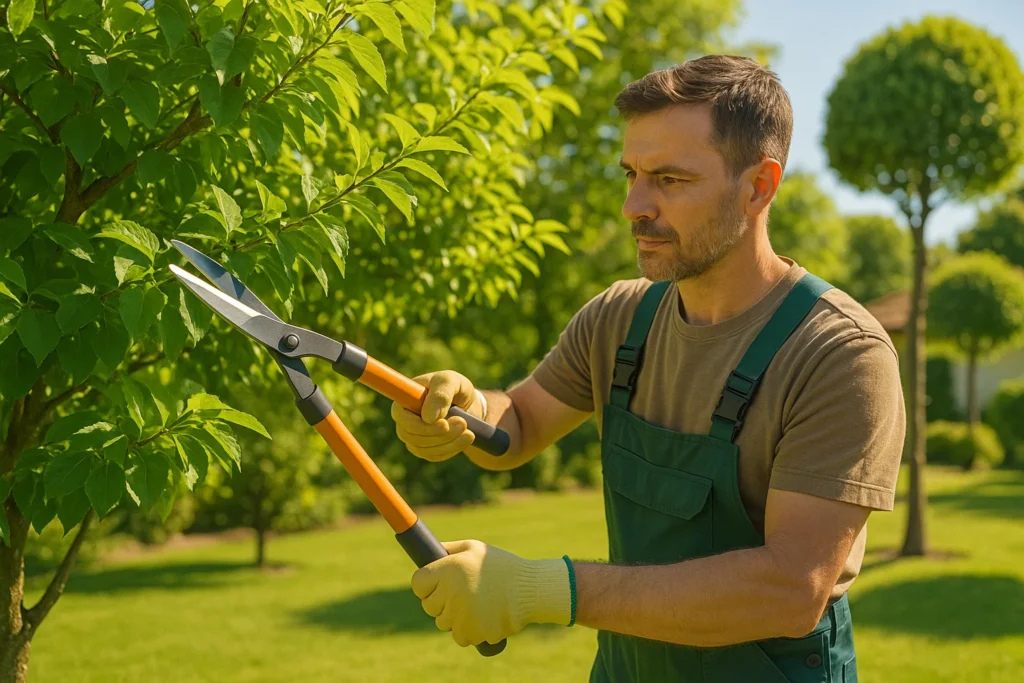
If your trees are starting to look a little wild or uneven, then it might be time to grab those pruning shears. The concept of learning how to trim trees properly is not just about making your yard look good, but more about keeping your trees healthy, strong, and safe. Trimming the right way can make all the difference between a thriving landscape and one that struggles through every season, whether you are working with a backyard oak or a small fruit tree.
Why should we Trim Trees?
All you need to think of tree trimming is as a haircut. If it gets too little, then things get messy, or if it gets too much, then you risk doing damage. Some trees need regular trimming to remove the dead branches, promote new growth, and prevent the limbs from becoming hazards during storms. You are actually helping them live longer and stay disease-free when you trim trees correctly.
Neglected trees often grow unevenly, which can cause the branches to rub against each other or block essential sunlight. It has been noticed that such a situation might lead to weak spots and poor airflow, which invites pests and fungi over the passage of time. The practice of regular trimming would help in keeping everything balanced simply by ensuring your trees stay strong and continue to beautify your yard for years to come.
The Best Time to Trim Trees
It is interesting to know that timing plays a huge role in how your trees respond to trimming. Some of the arborists recommend pruning in late winter or early spring, or probably right before new growth begins. And there is less risk of spreading the disease during this dormant season as trees heal faster.
That said, if you notice dead or damaged branches at any time of the year, then you may go ahead and trim them. You must know that waiting too long could let the problem spread deeper into the tree.
How to Trim Trees Without Damaging Them
You should always begin by inspecting the tree when it’s time to get started. The identification of branches that are dead, crossing, or growing inward can be considered the first step. In the next step, you need to remove the canopy and improve airflow at the same time. You need to make your cuts just outside the branch collar, which is the slightly raised area where the branch meets the trunk for thicker branches. Cutting too close or too far away can prevent the proper healing, too.
It is important to mention that clean and sharp tools are needed to make smooth cuts. On the other hand, dull blades crush wood fibers, leaving jagged wounds that invite decay. Smaller branches can be handled with pruning shears, while medium-sized ones may need loppers. You might consider hiring the professionals who know how to trim trees safely without risking injury or damage to property for anything large or high up.
The Secret to Shaping Trees Perfectly
Trimming is not just maintenance but also an art. The goal is to create a natural, balanced shape that enhances the appeal of your yard while keeping the tree’s health in check. You must focus on developing a strong central leader (the main upward-growing branch), certainly for young trees. This gives the tree a stable structure as it matures.
The ultimate goal is to maintain shape while removing dead or heavy branches from the mature trees. It would not be wrong to think of it like sculpting, as every cut should serve a purpose. The results will look effortless and organic when you trim trees with patience and intention.
The Long-Term Benefits of Regular Trimming
You may take it as you are setting the stage for long-term success when you make tree trimming part of your regular yard routine. Trimmed trees grow more evenly, resist damage better, and boost your property’s curb appeal at the same time. They also allow more sunlight to reach your lawn and garden, which results in creating a healthier overall ecosystem.
Think of trimming as an investment not just in your trees, but in your entire outdoor space. You are protecting the beauty and longevity of your landscapes every time you trim trees with care. It is one of those simple maintenance habits that pays off year after year.
Final Thoughts
The practice of learning to trim trees the right way is one of the best things you can do for your yard. It would end up keeping your landscape looking neat, preventing hazards, and promoting healthy growth. So, the goal is the same. A well-shaped and vibrant tree that stands tall and strong year after year, whether you tackle small branches on your own or hire experts for the big jobs.
FAQs
1. How often should I trim trees in my yard?
Most trees should be trimmed every 2–3 years.
2. Can trimming hurt my trees?
Yes, over-trimming or improper cuts can stress your trees.
3. Do I need special tools to trim trees?
Basic pruning shears, loppers, and a clean saw are usually enough.
4. Is it okay to trim trees in summer?
Light trimming is fine in summer, but avoid heavy pruning since it can weaken the tree in high heat.
5. Should I hire a professional to trim my trees?
If your trees are large, near power lines, or require heavy lifting, then it is best to call a certified arborist.